
Ideas That Help the World.
Let’s Build Yours.
We turn your ideas into real-world tools, platforms, and apps, adding clinical rigor and innovation.
Research & Development Services
Three ways we partner with you and your teams.
Tool Development
- Scale Creation & Validation
- Digital Assessment
- Treatment Outcome Tools
Technology Integration
- AI-Assisted Diagnosis & Treatment
- Mobile Apps
- Telehealth Adaptability
Program Development
- Curriculum Design & Outcome
- Training Modules
- Research Methods & Statistics
Educational, Health, and Tech Professionals and Companies
Tap a category for the specific services we offer.
Educational Technology (EdTech) Companies
- Cognitive load and engagement metrics testing
- Learning effectiveness and outcome studies
- Assessment tool development and validation
- Accessibility and neurodiversity consulting
- Age-appropriate interface design research
- Cognitive usability and memory testing
- Executive function impact assessments
- Curriculum impact analysis
Technology Companies
- Advisory and consultant roles on company boards and committees
- Expert guidance on product development and clinical applications
- Virtual/augmented reality applications
- Gamification of behavioral and cognitive training
- Wearable technology integration
The tools we’ve built to run our own practice
Gestalt 1.0 runs our caseloads. Compass builds clinical competency. Luria 1.0 assesses intelligence. All three were built in-house and are already at work in our own practice.
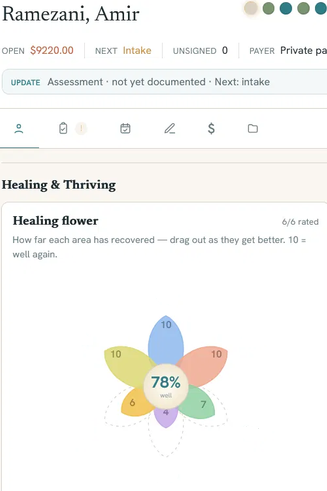
Progress you can see at a glance
Gestalt 1.0 turns dense symptom and wellbeing data into a single living visual: a “Healing” flower tracking recovery, and a “Thriving” flower tracking what’s feeding a person’s growth.
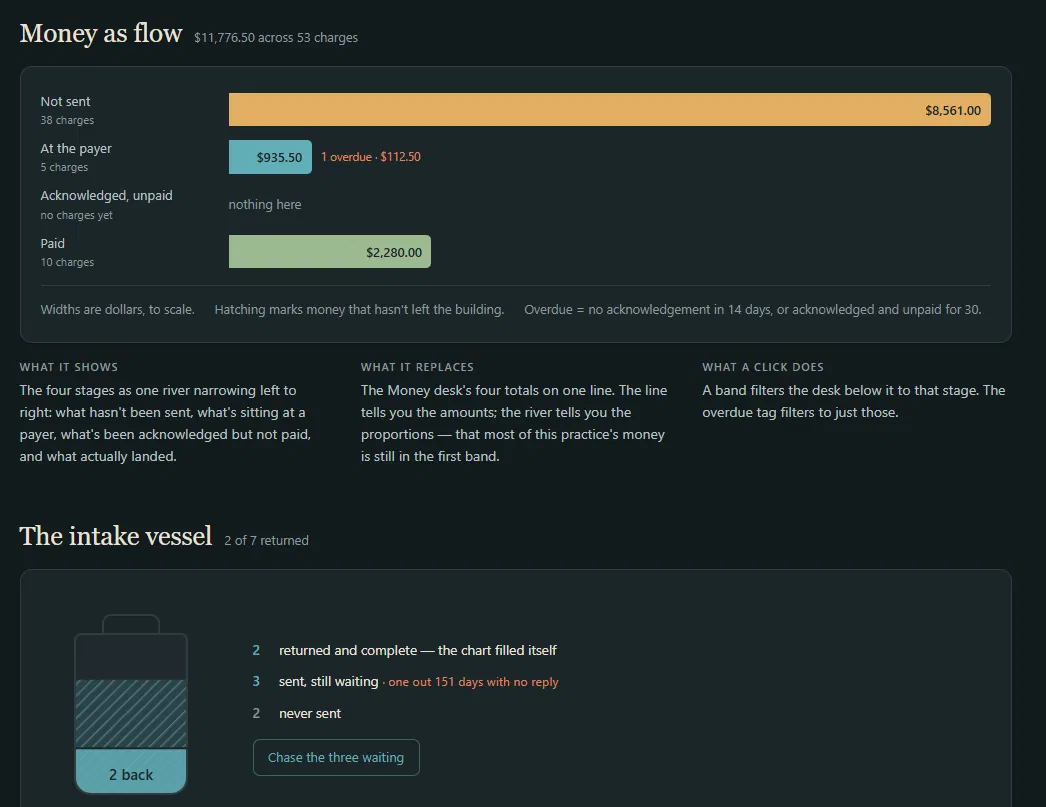
Money, intake, and paperwork, finally visible
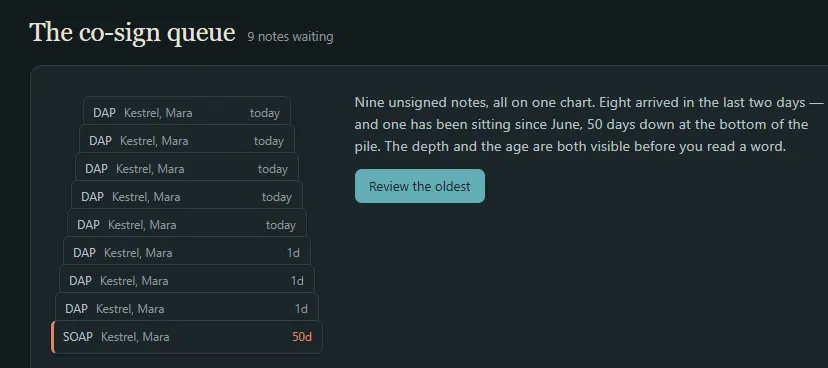
Gestalt 1.0 replaces a wall of spreadsheets with a single flow: what hasn’t been billed, what’s sitting with a payer, and what’s actually been paid. The same clarity extends to intake packets and unsigned notes.
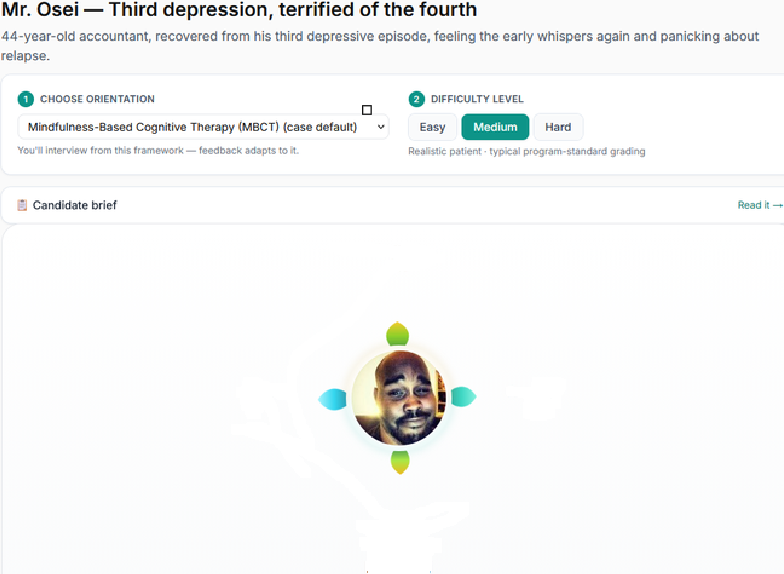
Practice on a patient who can’t be harmed
Compass helps professionals build the competency to conduct therapy and exams, including comprehensive doctoral-level exams. Trainees choose a clinical orientation, set a difficulty level, and interview a realistic AI patient, with live feedback on rapport, presence, confidence, and diagnostic accuracy.
A new standard for intelligence assessment
Luria 1.0 is our next-generation intelligence assessment platform, currently in development within the Education & Research division. Named for the founder of modern neuropsychological assessment, it’s built with the same rigor as everything else we bring into our own clinics.
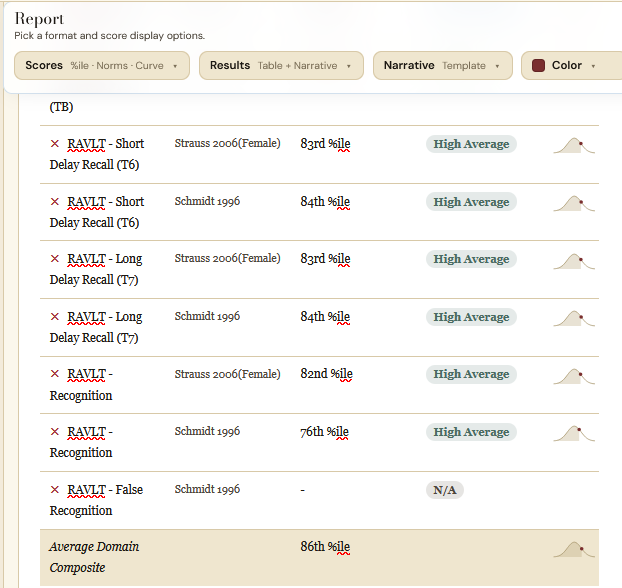
Scores, curves, and narrative in one view
Every subtest score is auto-populated with percentiles, classifications, and normal-curve placement, so reports that used to take hours come together in minutes.
Tools we’ve built, and put to use
Each tool below was developed in-house and is already in active clinical or educational use.
Luria 1.0
Our next-generation intelligence assessment platform, currently in development.
Preview Luria 1.0 →TBI Consensus Inventory
A consensus-based inventory covering current diagnostic criteria for mild traumatic brain injury.
Explore the TBI Tool →Park Plus
The Parkinson’s-Plus Weighted Inventory, a fast screening tool for MSA, PSP, CBD, and DLB.
Try Park Plus →LearnBrain
Interactive MRI worksheets that teach brain anatomy, from labeled diagrams to real clinical scans.
Open LearnBrain →FTD
An interactive guide to frontotemporal dementia, covering clinical subtypes and differential diagnosis.
Explore the FTD Tool →